Walk the terraces
Choose a marked boardwalk route for close views of the formations. Active water flow and colors change, so visit the landscape rather than one promised photograph.
Explore the planning guide →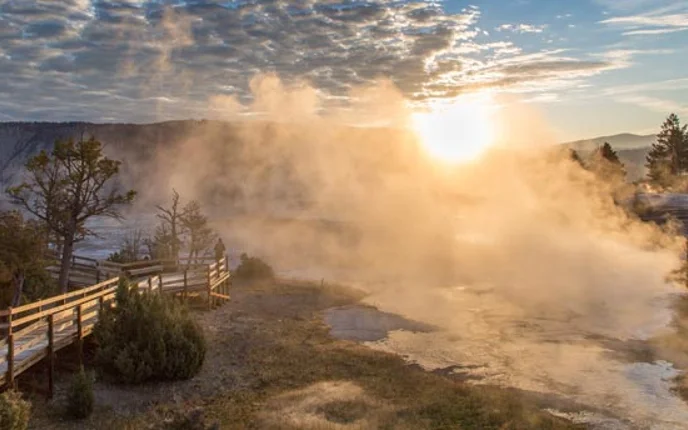
White and orange terraces step down the hillside at Mammoth, with steam drifting above the boardwalks. Below them, the buildings of Fort Yellowstone and the Albright Visitor Center add a different side of the park to a geothermal visit.
Give the terraces a deliberate stop on a northern park day. If Mammoth and repeated Lamar Valley mornings are your main priorities, compare a northern overnight with returning to West Yellowstone each evening.
Choose a marked boardwalk route for close views of the formations. Active water flow and colors change, so visit the landscape rather than one promised photograph.
Explore the planning guide →The historic buildings around the developed area help explain the park’s early management. Pair them with a terrace walk for a varied stop.
Explore the planning guide →Use the visitor center for park history, wildlife interpretation and current local advice when open. It complements the outdoor walking.
Explore the planning guide →Upper and lower terrace visits are not one identical walk. Look at the current routes, steps and parking before deciding how much to cover. For a lighter stop, choose one area and leave the rest for a future visit. For a longer day, add the historic district rather than simply doubling the walking. The terrace landscape changes as water finds new outlets; a dry-looking formation is still part of the place.
From a West Yellowstone base, Mammoth deserves space in the itinerary. Make the drive and terrace visit the main northern commitment, then add another stop only if it leaves time to look around. Trying to append Mammoth after a long Old Faithful visit can turn the day into continuous driving. For a first short stay, decide whether this region matters more than a canyon day or an extra geothermal basin.
The selected Lamar Valley wildlife tour visits the northern park and lists Mammoth-area scenery, but its purpose is wildlife observation. That is different from an unhurried walk through the terraces and Fort Yellowstone. Book it for the guide, optics and wildlife focus. If terrace walking is essential, confirm that time with the operator or plan a separate self-drive visit.
West Yellowstone remains convenient when Mammoth is one day within a wider western-park trip. For multiple northern mornings, compare Gardiner and the actual road route before booking all nights in town. Winter makes that choice more important: the northern road corridor and the West Entrance have different access arrangements. Choose the seasonal route first, then the hotel that supports it.
Stay in West Yellowstone for a single northern day within a wider visit. For repeated northern mornings, compare Gardiner before reserving all your nights here.
No. The terrace hot springs are thermal features to view from designated routes, not swimming pools.
No. Water flow and the appearance of individual formations change. Plan to see the current landscape rather than one specific image.
West Yellowstone suits a wider western-park stay. Compare Gardiner for a trip centered on Mammoth and repeated northern wildlife visits.
No. A Mammoth-area stop on a wildlife itinerary is not a promise of an extended terrace visit. Confirm the walking stop or self-drive separately.